Interested in learning more?
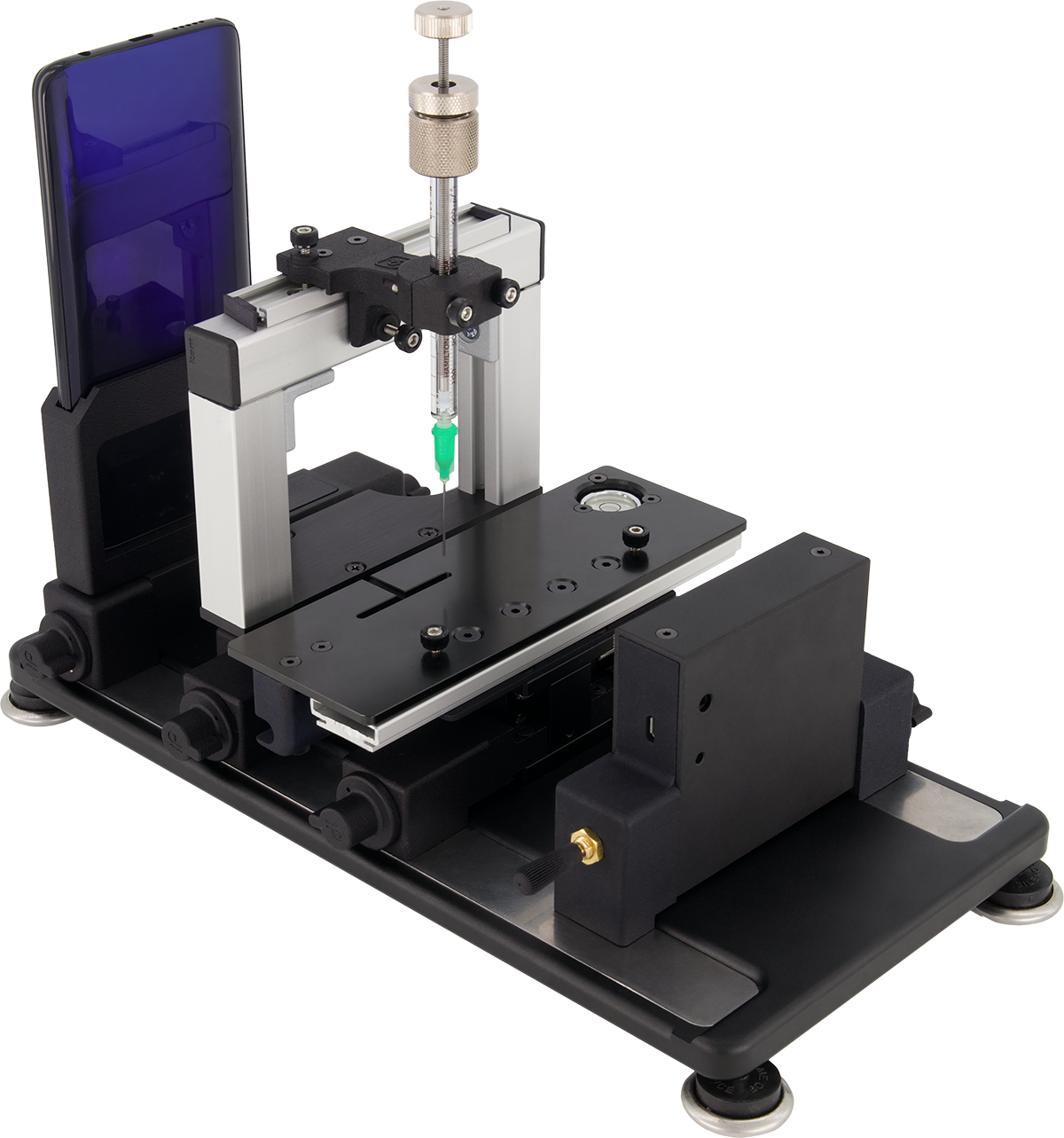
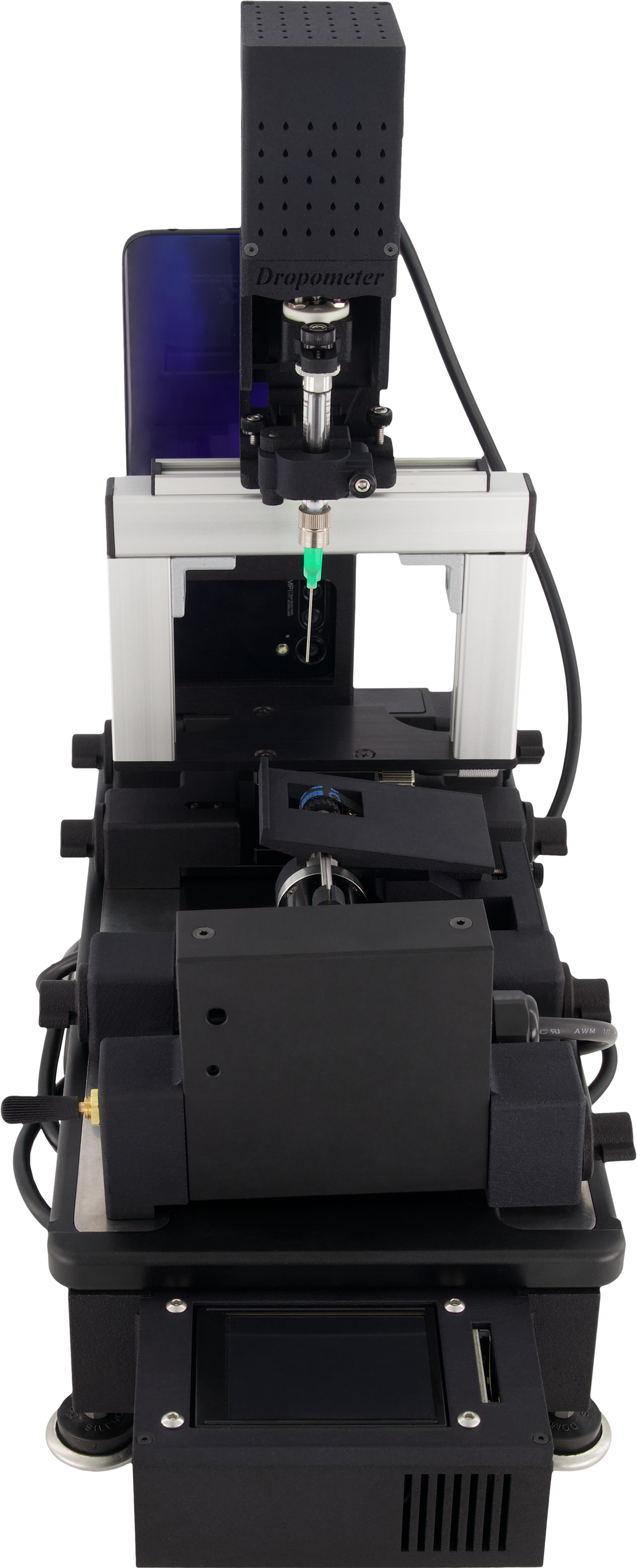
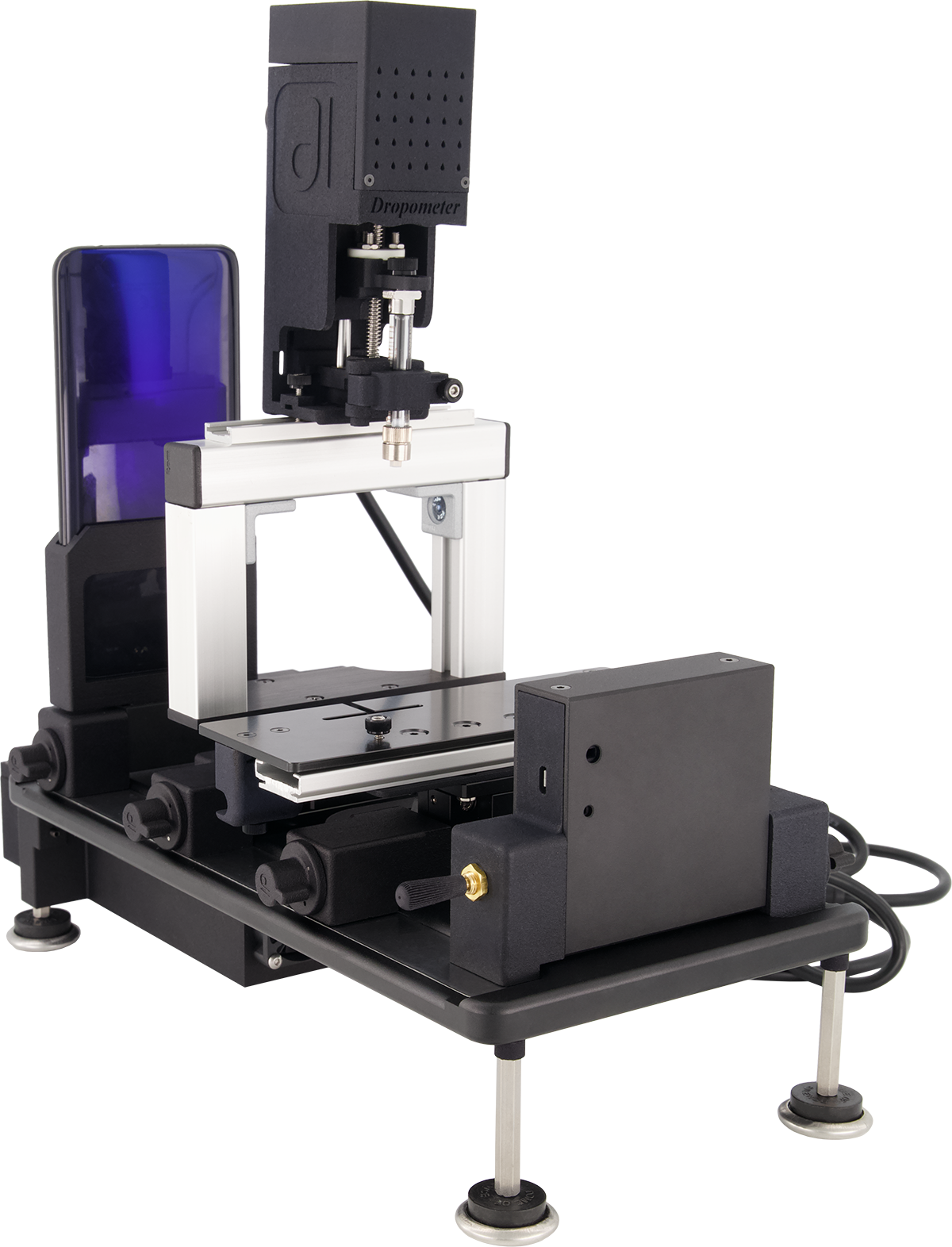
Pioneering smartphone-based technology with precise surface measurements in a compact device.
Effortless setup, intuitive operation, and peer-reviewed accuracy. Providing accurate contact angle, surface tension, surface energy, and sliding angle measurements, Princeton Scientific Corporation offers researchers and educators the technical capabilities normally found in far more expensive and cumbersome scientific equipment.
Discover the Science Behind Our Tensiometers
Explore how leading researchers are using contact angle and surface energy measurements in real-world applications. The first article from Colloids and Surfaces A investigates how surface tension influences material behavior in complex fluids, offering valuable insights for formulation and product development. The second article, published in Review of Scientific Instruments, demonstrates a novel approach to contact angle measurement using a smartphone, highlighting the growing demand for accessible, accurate surface analysis. Click the links below to read the full research and see the science supporting our tensiometers in action.
360 View
Get A Closer Look